 Ultimate guide
Are ADA Standards Required for Canadian Home Renovations?
Quick Summary
The ADA does not govern Canadian homes, so ada compliant home renovation standards in Canada come from the National Building Code, the CSA B651 accessibility standard and provincial legislation. Which rules apply depends on the type of building and the municipality, so confirm obligations before starting work.
- The Americans with Disabilities Act is a United States law with no authority over Canadian houses.
- Canadian residential renovation is governed by the National Building Code, CSA B651 and provincial law.
- Many provincial accessibility rules apply to public and commercial buildings rather than private homes.
- Install solid blocking behind the finished wall for grab bars rather than relying on screws in drywall.
- Plan grab bar locations and clear floor space with the person who will use the bathroom.
Table of Contents
- The Standards That Actually Apply: NBC, CSA B651 and Provincial Law
- Accessible Bathroom Renovation Requirements Explained
- Aging in Place Home Renovations: Planning Ahead Without Overbuilding
- Barrier-Free Home Renovation Checklist for Ontario Homeowners
- Home Accessibility Renovation Grants and Tax Credits in Canada
- Booking an Accessibility Assessment Before You Start Work
- Frequently Asked Questions
Why the ADA Does Not Govern Canadian Homes
If you are planning accessible work at home in Ontario, the first question is usually whether the ADA applies. It does not. The Americans with Disabilities Act is a United States law, and it has no authority over a house in St. Thomas or anywhere else in Canada. What governs Canadian residential renovation is a mix of national model codes, a voluntary technical standard, and provincial legislation. Understanding which applies to which situation saves time and avoids costly rework, and it is the foundation for any discussion of ada compliant home renovation standards in Canada.
Confusion is common. Tactile Solution's overview of accessibility compliance notes that foreign standards are frequently misapplied to domestic projects, which is why a homeowner may hear "ADA" from a contractor and assume it is the rule to follow.
Last Updated: October 28, 2026
The Standards That Actually Apply: NBC, CSA B651 and Provincial Law
Three layers matter. The National Building Code of Canada (NBC) is a model code, and provincial accessibility legislation varies by jurisdiction.
The Standards Council of Canada's accessibility planning work shows how national bodies are formalizing inclusion goals, and Accessibility Standards Canada's draft accessible-ready housing standard points toward housing designed for future adaptation. Note that many provincial rules apply to public and commercial buildings rather than private homes, so confirm which obligations reach your project before assuming they do.
Accessible Bathroom Renovation Requirements Explained
Accessible bathroom planning can include considering future needs. The bathroom renovation services page lists the plumbing, electrical and general contracting work involved in a bathroom project.
Watch out: installing grab bars into standard drywall with only screws is a common error. The fixture can pull free under load, so blocking must sit behind the finished wall.
Grab Bar Reinforcement and Blocking
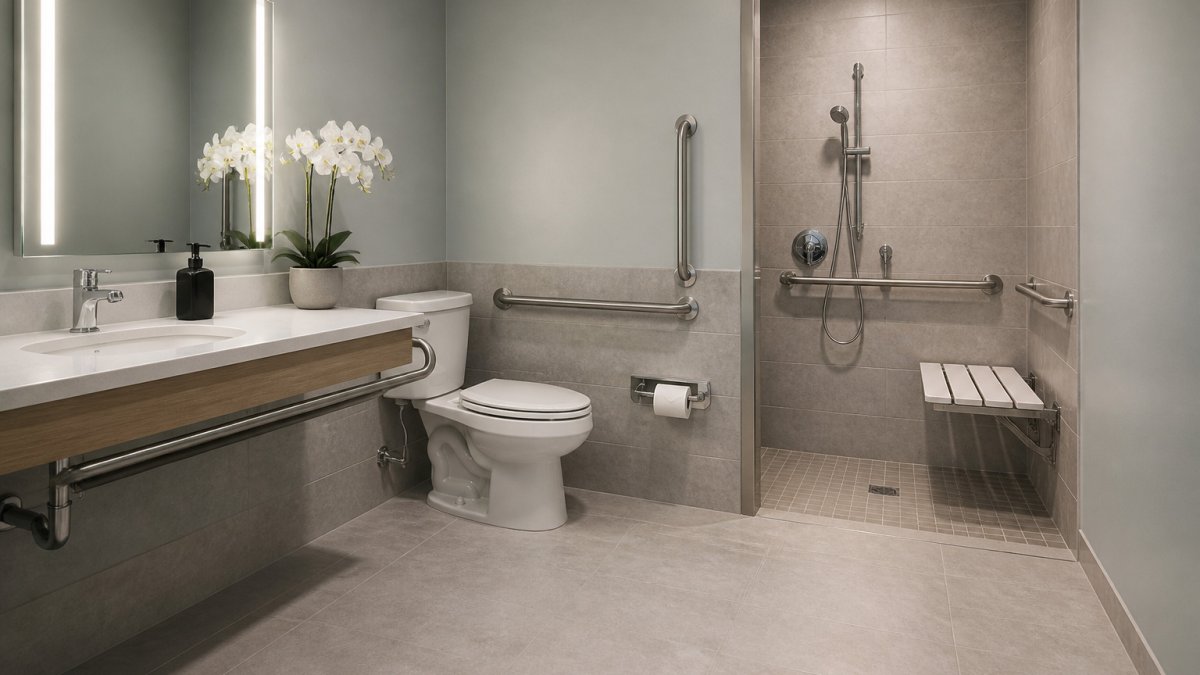
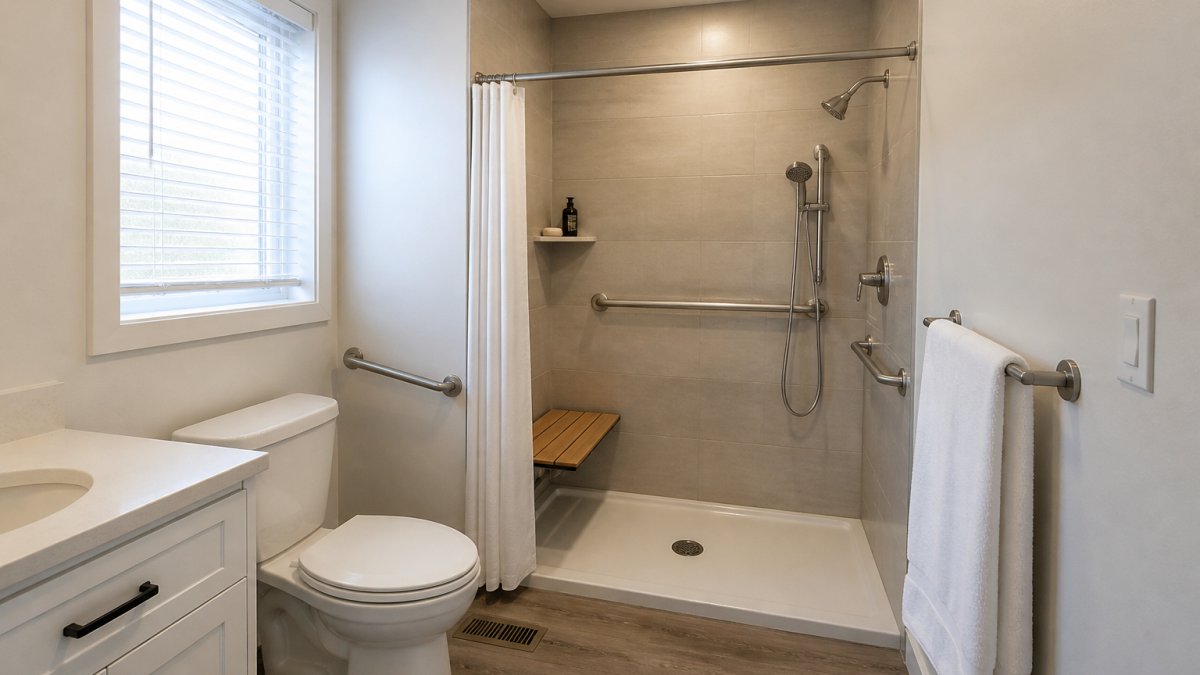
Solid blocking, typically dimensional lumber or backing plates set between studs at the height where a person would reach for support, is the most practical preparation. Plan the locations with the person who will use the bathroom, not from a generic diagram, because reach and balance vary widely.
Doorway Widths and Clear Floor Space
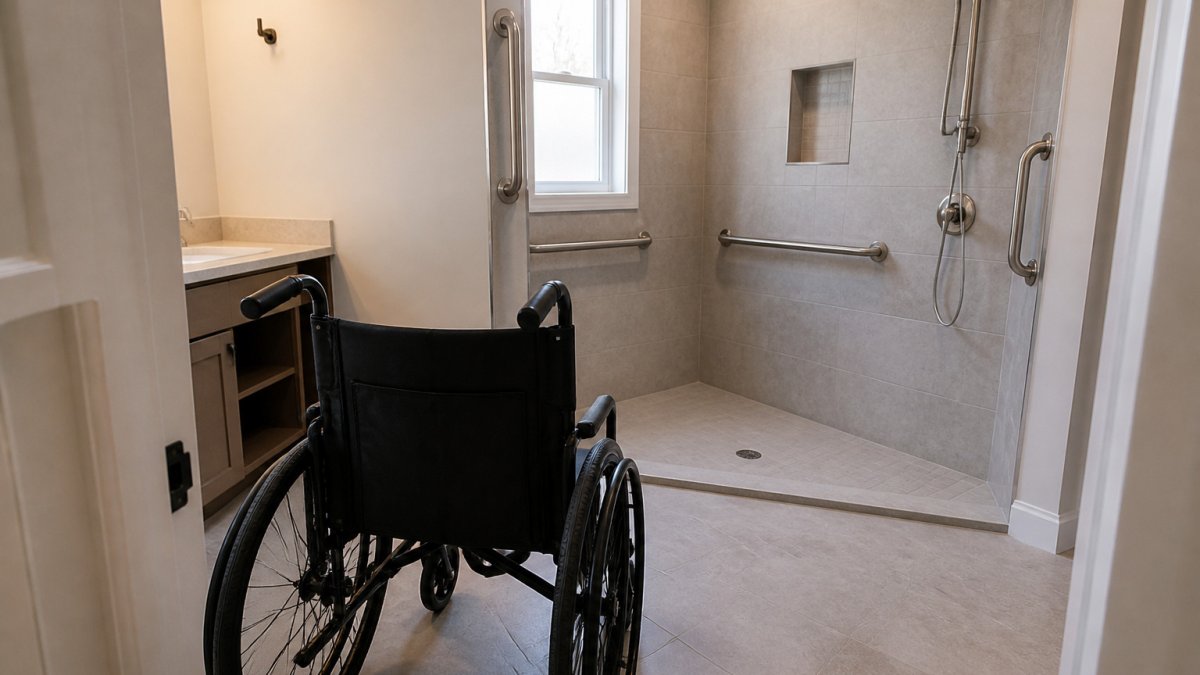
Consider clear floor space in front of the toilet, shower and vanity when planning for wheelchair or walker access.
The article's bathroom guidance comes down to a few planning points worth checking before work begins.
| Planning point | What to do | Why it matters |
|---|---|---|
| Grab bar blocking | Install solid blocking behind the finished wall | Screws alone in drywall can pull free under load |
| Blocking locations | Set blocking where a person would reach for support | Reach and balance vary widely between users |
| Clear floor space | Check space at toilet, shower and vanity | Needed for wheelchair or walker access |
| Doorway widths | Confirm widths for wheelchair or walker access | Affects movement through the bathroom |
Aging in Place Home Renovations: Planning Ahead Without Overbuilding
Many owners want their home to work for them at 80 as well as 40, but they do not want an institutional look. The practical approach is to build in the invisible infrastructure now (reinforced walls, wider circulation paths, a bathroom layout with space for a future roll-in shower) and to add visible fixtures only when they are needed. This keeps costs proportionate and avoids designing for a need that may not arrive.
Barrier-Free Home Renovation Checklist for Ontario Homeowners
Use this checklist when scoping a project:
- Confirm which code and standard apply to your specific work and municipality
- Plan blocking for grab bars in showers, tubs and beside the toilet
- Verify clear floor space at the toilet, shower and vanity against CSA B651
- Check doorway widths and threshold heights for wheelchair or walker access
- Specify lever handles and rocker-style switches where they will be used
- Improve lighting levels in corridors, bathrooms and stairways
- Address slip resistance on shower and bathroom floors
- Document the plan with the person who will use the space
Innovative Interior Consultants Inc provides end-to-end residential renovation services, including accessibility solutions.
Home Accessibility Renovation Grants and Tax Credits in Canada
Program availability, eligibility and amounts can change. Check current information with the relevant official sources before budgeting.
Booking an Accessibility Assessment Before You Start Work
Before any demolition, consider which standards may apply and how the work can proceed around daily life. request a renovation quote to start, or get in touch with us.
Frequently Asked Questions
Does the ADA apply to private homes in Canada?
No. The Americans with Disabilities Act is United States law and does not govern private homes in Canada. Canadian renovation requirements depend on the applicable jurisdiction and project.
What accessibility standards should Canadian homeowners consider when renovating?
Accessibility requirements depend on the applicable jurisdiction and project. Homeowners can consult official sources for current information.
How do you make a bathroom more accessible during a renovation?
Accessible bathroom planning can consider the needs of the person who will use the space.
Are there Canadian grants or tax credits for accessibility renovations?
Program availability and eligibility can vary. Check current information with the relevant official sources before committing to a project.
Do accessible home renovations require a building permit?
Permit requirements depend on the project and municipality. Check current requirements with the relevant local building department before starting work.
What features should an accessible home renovation checklist include?
A barrier-free renovation plan can be tailored to the needs of the people who will use the space.