 blog
7 Critical Steps to Hire a Bathroom Remodel Contractor
Last Updated: October 26, 2026
Quick Summary
A bathroom remodel contractor manages design coordination, material sourcing, trade scheduling, and quality control to transform your renovation from a potential financial nightmare into a successful project. Hiring the right contractor requires vetting experience, verifying licensing and insurance, calling references, and comparing detailed written estimates before signing anything.
- Ask contractors how many bathroom renovations they've completed in the past three years; 50+ projects signals established systems and efficiency.
- Request detailed line-item quotes specifying materials by brand and model, labor broken down by trade, timeline with milestones, and what triggers cost changes.
- Most full bathroom renovations take 4 to 8 weeks; gut renovations with structural changes and custom cabinetry often take 6 to 10 weeks.
- Verify licensing through your provincial registry, confirm insurance with the insurer directly, and call at least three recent homeowner references before committing.
- Red flags include pressure to decide quickly, unwillingness to provide references, requests for large upfront payments, and no clear permit or inspection plan.
Table of Contents
- Why Choosing the Right Bathroom Remodel Contractor Matters
- Essential Questions to Ask a Bathroom Contractor
- Understanding What a Bathroom Renovation Quote Should Include
- Realistic Bathroom Renovation Timeline and Project Phases
- Your Bathroom Renovation Checklist: Vetting and Selection
- Red Flags and Common Contractor Mistakes to Avoid
- Booking Your Bathroom Renovation Consultation
- Frequently Asked Questions
Why Choosing the Right Bathroom Remodel Contractor Matters
Hiring the wrong bathroom remodel contractor can turn a dream renovation into a financial nightmare. Cost overruns, missed deadlines, and poor workmanship are common enough that homeowners often approach renovations with dread.
The difference between success and failure usually comes down to contractor selection. A skilled bathroom remodel contractor manages design coordination, material sourcing, trade scheduling, and quality control, communicating clearly and solving problems before they become expensive disasters.
The projects that exceed expectations share one trait: the homeowner invested time upfront vetting the contractor before signing anything.
This guide walks you through the exact process we recommend. We cover the questions to ask, what quotes should contain, realistic timelines, and a practical vetting checklist. You'll finish knowing what separates a trustworthy bathroom remodel contractor from one who'll create headaches.
Essential Questions to Ask a Bathroom Contractor
The right questions reveal whether a contractor has the experience and systems to deliver. Don't accept vague answers, specific responses matter.

How many bathroom renovations have you completed in the past three years? A contractor with 50+ recent renovations has systems and efficiency; someone with five may still be figuring things out.
What's your process for handling unexpected issues? Bathrooms hide surprises: rotted subfloors, plumbing problems, structural issues. Ask how they discover, communicate, and price solutions.
Do you pull permits and handle inspections? This matters more than homeowners realize. Unpermitted work creates liability, fails inspections, and complicates future sales.
How do you manage the project schedule? Ask about booking, trade coordination, and what happens if a subcontractor falls behind. A clear answer signals systematic management; a vague one signals chaos.
Understanding What a Bathroom Renovation Quote Should Include
A professional quote isn't just a number, it's a detailed breakdown that lets you compare apples to apples.
A complete bathroom renovation quote should list every category of work, demolition, framing, plumbing, electrical, tile, cabinetry, countertops, painting, finishing, each with a line-item cost.
The quote should specify materials by brand and model, not generic descriptions. "Tile" isn't specific enough. "Porcelain floor tile, 12x24, Daltile Concrete Chic, color Ash" is.
The quote must include a timeline: start date, expected completion date, and major milestones.
Ask whether the quote includes disposal, cleanup, and site protection. Some contractors bundle them; others add them later. Knowing upfront prevents disputes.
Request a renovation quote to see how your project is structured and what a detailed estimate looks like.
Realistic Bathroom Renovation Timeline and Project Phases
Bathroom renovations unfold in phases, and understanding the timeline and disruption each creates helps you plan your household.
Here is how the phases typically break down, what happens in each, and how to prepare your home.
Phase 1: Demolition and site prep (1 to 2 weeks). The crew removes fixtures, flooring, wall finishes, and sometimes drywall to the studs. Dust containment goes up first: plastic sheeting, negative air pressure with a HEPA-filtered fan, and floor protection. Surprises often emerge here, hidden water damage, outdated wiring, structural issues, which is why experienced contractors build in contingency time.
Phase 2: Rough-in work (2 to 3 weeks). Plumbing, electrical, and HVAC rough-ins go in next, and inspections must pass before walls close up. A plumbing permit triggers a rough-in inspection before drywall; electrical is inspected separately. Delays here cascade into every later phase, so ask how your contractor schedules inspections.
Phase 3: Insulation, drywall, and waterproofing (1 to 2 weeks). Walls close up, and the wet area gets waterproofing, either a liquid-applied membrane or a sheet membrane behind tile. This is a quality checkpoint: ask to see photos of the waterproofing before tile goes on, because it is invisible once covered.
Phase 4: Tile, cabinetry, and fixtures (2 to 4 weeks). Finish work is the longest phase: tile setting, grouting, cabinet installation, countertop templating and fabrication, and fixture installation. Countertop fabrication alone often adds 5 to 10 business days after template, a common schedule pinch point.
Phase 5: Final inspections, punch list, and cleanup (3 to 5 days). The contractor schedules final inspections, walks the punch list with you, and completes touch-ups. A professional bathroom remodel contractor builds buffer time into the schedule for inspections and minor adjustments.
Planning for disruption. Expect the bathroom to be unusable for most of the project. Set up a temporary wash station in a nearby room and plan shower access at a gym, community center, or second bathroom.
Weather, material delays, and trade availability affect timelines. A contractor promising a fixed timeline with no contingency is overconfident or inexperienced. Realistic estimates include a 10-15% buffer, and a written schedule with milestone dates beats a verbal promise.
Your Bathroom Renovation Checklist: Vetting and Selection
Use this checklist to systematically evaluate contractors before you decide. The table gives the criteria; the notes below explain how to verify each one.
| Evaluation Criteria | What to Check | How to Verify | Red Flag |
|---|---|---|---|
| Experience | 50+ bathroom projects in past 3 years | Ask for a project list with addresses or photos and dates | Fewer than 20 projects or vague history |
| References | 3+ recent homeowner references you can call | Call each one; ask the questions below | Unwilling to provide or defensive about past work |
| Licensing | Valid contractor license for your province | Look up the license number in the provincial registry | No license number or evasive answers |
| Insurance | Liability insurance and workers' compensation coverage | Request a certificate of insurance naming you as certificate holder; call the insurer to confirm | Expired certificate or refusal to provide one |
| Written Estimate | Detailed line-item quote with materials, labor, timeline | Compare line items across bidders (see below) | Vague estimate, missing categories, no timeline |
| Communication | Responds within 24 hours, explains clearly | Note response times during the bidding process | Slow to respond, uses jargon, avoids questions |
| Process Documentation | Shows you their project management system | Ask for a sample schedule and change-order form | No clear process, disorganized, ad-hoc approach |
| Permit Handling | Pulls permits, schedules inspections as standard | Ask which permits the project requires and who pulls them | Suggests skipping permits or treating as optional |
| Problem-Solving | Explains how they handle unexpected issues | Ask for a recent example with cost and timeline impact | Claims no problems ever occur or avoids the question |
Verifying licensing. Most provinces maintain a public online registry of licensed contractors. Ask for the license number, look it up yourself, and confirm it is current and covers the work.
Verifying insurance. Ask for a certificate of insurance showing general liability and workers' compensation coverage, then call the insurer to confirm the policy is active and the limits.
Calling references. Ask three specific questions: Did the project finish on the date promised? Did the final cost match the written estimate, and if not, what changed? Would you hire them again? Vague praise is less useful than specifics.
Comparing quotes apples to apples. Request detailed quotes from 3 to 5 contractors and compare them line by line across demolition and disposal, framing, plumbing rough-in and fixtures, electrical, insulation and drywall, waterproofing, tile and setting materials, cabinetry and countertops, painting, and cleanup. Check that materials are listed by brand and model, labor is broken out by trade, and allowances are stated. Note exclusions, permits, design fees, appliance relocation, and disposal are commonly excluded. Ask each contractor to explain vague lines and how change orders are priced. The lowest total isn't the best bid if it excludes work the others included.
Meeting in person. You're trusting this contractor with your home for weeks. Gauge whether you feel confident in their competence and comfortable with their communication style.
Browse photos of completed bathroom projects to see the quality and style this contractor delivers.
Red Flags and Common Contractor Mistakes to Avoid
Certain patterns signal trouble. Watch for these warning signs before you commit.
Pressure to decide quickly. A contractor pushing you to sign before you're ready is prioritizing their schedule, not your interests.
Unwillingness to provide references. This is a dealbreaker. References are how you verify experience. If a contractor won't provide them, there's a reason.
No written estimate or vague pricing. "Around $20,000 to $30,000" isn't a quote.
Requests for large upfront payments. Industry standard is 30-50% down, the rest at milestones.
No permit or inspection plan. Unpermitted work creates liability.
Poor communication or unresponsiveness. If a contractor is hard to reach before you hire them, they'll be impossible to reach during the project.
No clear process for handling changes. Scope changes happen.
Negative references or online reviews mentioning delays or cost overruns. One bad review might be an outlier. Multiple complaints about the same issues signal a pattern.
Booking Your Bathroom Renovation Consultation
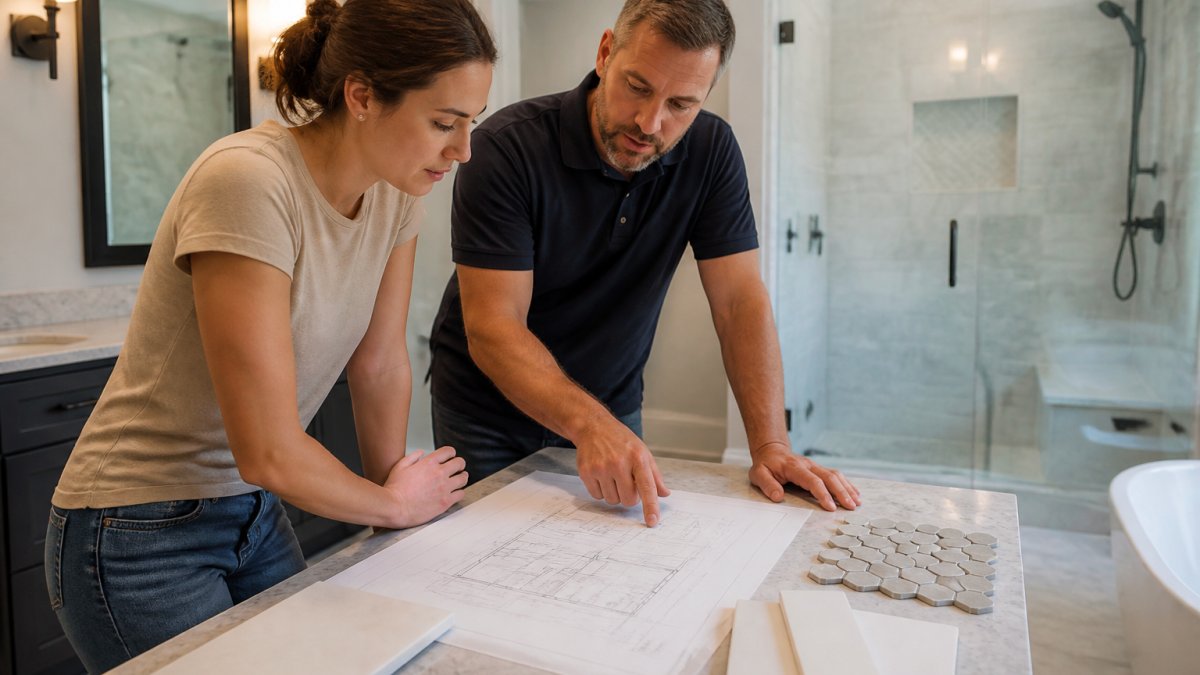
Once you've narrowed your choice to one contractor, the consultation is where you finalize scope, timeline, and budget before work begins.
Bring photos or inspiration images of the style you want, discuss must-haves versus nice-to-haves, and talk through your budget and what it must cover.
The contractor should walk you through their process: project management, communication, handling unexpected issues, and trade coordination.
Discuss accessibility needs if relevant. If you're aging in place or have mobility concerns, this is the time to discuss solutions that work for your space and budget.
Get in touch to book a consultation and discuss your bathroom renovation project in detail.
A good consultation takes 30 to 60 minutes. You should leave with a clear understanding of scope, timeline, and cost. If the contractor rushes through or leaves you confused, keep looking.
Hiring the right bathroom remodel contractor requires upfront work, but it pays dividends. Innovative Interior Consultants Inc specializes in end-to-end residential renovation services with detailed project management, transparent communication, and a commitment to finishing on schedule and within budget. Read what our customers say about their bathroom renovation experience to see how we approach this work.
Frequently Asked Questions
What should a bathroom renovation quote include?
A complete bathroom renovation quote must itemize labor, materials, permits, and fixtures with separate line items for plumbing, electrical, and tile work. It should specify start and completion dates, payment schedule, warranty terms, and what happens if unforeseen issues arise. The quote should also clarify which elements are included versus what costs extra, ensuring no surprises when the bill arrives.
How long does a typical bathroom renovation timeline take?
Most bathroom renovations take 4 to 8 weeks, depending on scope. A simple update with new fixtures and paint may take 3-4 weeks. A full gut renovation with layout changes, new plumbing, electrical work, and tile typically requires 6-8 weeks. Delays can occur if permits are slow, structural issues are discovered, or materials are backordered. Always ask your contractor for a detailed timeline broken into phases.
What questions should you ask a bathroom contractor before hiring?
Ask about their experience with projects similar to yours, whether they hold required licenses and insurance, how they handle permit applications, and their warranty on workmanship. Request references from past clients and ask how they manage timelines and budget overruns. Also clarify how they'll minimize disruption if you're living in the home during renovation, and whether they coordinate with architects or designers if needed.
How do I know if a bathroom remodel contractor is reliable?
Verify they are licensed and insured. Check customer reviews and ask for references you can contact directly. A reliable contractor provides a detailed written estimate, explains their process clearly, responds promptly to questions, and stands behind their work with a warranty. They should also be transparent about potential issues and communicate proactively if problems arise during the project.