 How-to
Living in Your House During Kitchen Renovation
Table of Contents
- Prepare Your Home Before Renovation Begins
- Set Up a Temporary Kitchen During Renovation
- Plan Meals During Kitchen Renovation
- Implement Kitchen Remodel Dust Protection
- Understand Your Kitchen Renovation Timeline
- Manage Daily Life and Family Routines
- Coordinate with Your Contractor on Occupied Sites
- Frequently Asked Questions
Last Updated: October 18, 2026
Prepare Your Home Before Renovation Begins
Living during kitchen renovation requires serious planning when you're staying in your home. The key is preparing your home before the first hammer swings. This means protecting your living spaces, securing your belongings, and setting realistic expectations about daily disruption.
Start by identifying which rooms will be off-limits during the project. Your contractor needs a clear work area. This typically includes the kitchen itself, hallways leading to it, and potentially your front entrance if materials are delivered there.
Remove or protect everything in the kitchen that you want to keep. Cabinet contents, small appliances, decorative items, all of it needs to go. Pack dishes, glasses, and cookware into boxes and store them in a bedroom or basement.
Dust will travel. It settles on surfaces, seeps into adjoining rooms, and clings to furniture. Before work begins, move furniture out of the kitchen and any adjacent dining areas. Store it in a garage, basement, or spare room.
Check your home's layout. Where will your temporary kitchen go? A dining room, basement, or even a bedroom can work. The location should be close enough to a water source, a bathroom or laundry room, to make cleanup manageable. Think about electrical outlets too.
Talk to your contractor about the renovation timeline before work starts. How long will demolition take? When does installation begin? What are the noisiest phases? Understanding the schedule helps you plan around it. If your contractor estimates four weeks, assume it might take five or six. Delays happen.
Set Up a Temporary Kitchen During Renovation
A temporary kitchen doesn't need to be fancy. It needs to be functional. The goal is having a space where you can store food, prepare simple meals, and wash dishes without walking through an active construction zone.
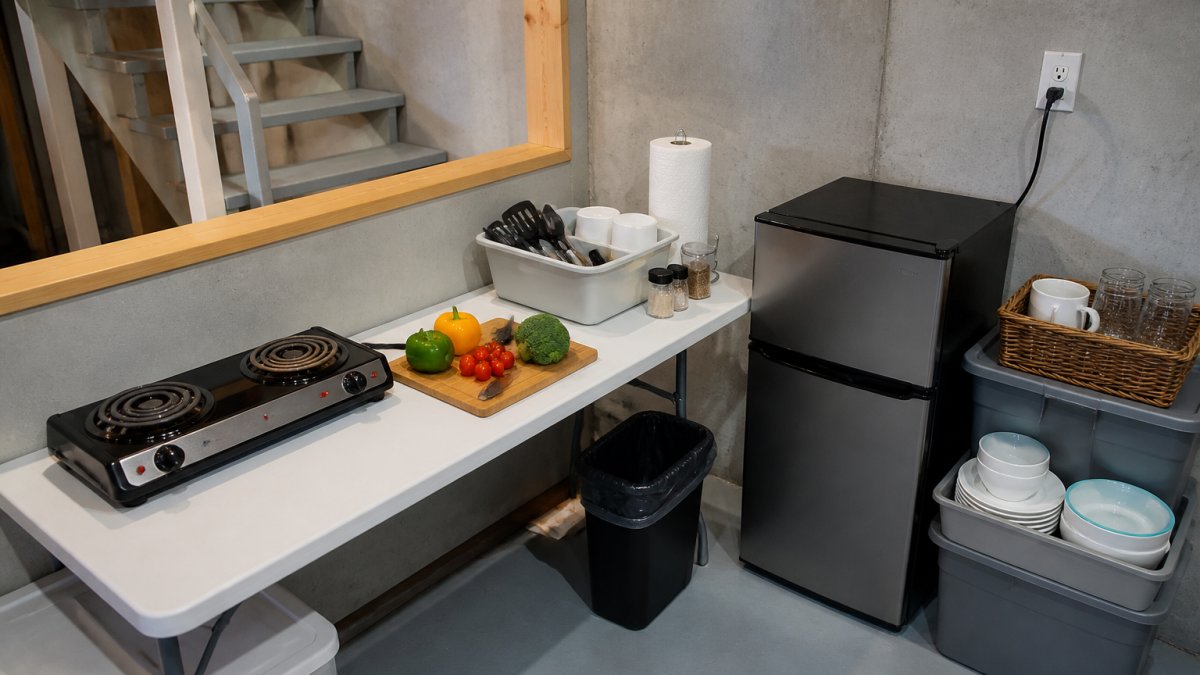
Start with the essentials. A mini-fridge keeps food cold. A microwave heats leftovers and cooks quick meals. A portable cooktop with two burners handles most cooking needs. A slow cooker is invaluable, throw ingredients in the morning, eat dinner ready-made at night.
Set up a washing station for dishes. A large plastic tub, dish soap, and a drying rack work fine. If your temporary kitchen is near a bathroom, use the sink there.
Organize your space efficiently. Keep frequently used items at eye level. Store cooking tools in one area, dishes in another, and food in a third. Use plastic storage bins to keep everything contained and easy to access.
Consider your family's needs. If you have young children, keep their snacks and breakfast items in an easy-to-reach location. Accessibility matters during renovation stress.
Power is critical. Count your outlets. A portable cooktop, mini-fridge, and microwave all draw power. You may need extension cords or a power strip. Check with your contractor about safe placement of cords, they shouldn't run across walkways where someone could trip.
Set boundaries with your contractor. Your temporary kitchen is off-limits to construction work. Dust, debris, and tools have no place there. A clear agreement prevents frustration and keeps your food safe.
Plan Meals During Kitchen Renovation
Cooking becomes strategic when your kitchen is torn apart. The goal is eating well without spending hours in your temporary space. Simple meals, batch cooking, and strategic shopping make this manageable.
Embrace slow cooker meals. Load it in the morning with chicken, vegetables, and broth. By dinner, you have a hot meal ready. Slow cookers are workhorses during renovation.
Plan a week of meals before renovation starts. Write a shopping list based on what you can realistically cook in your temporary kitchen. Buy ingredients for five to seven dinners.
Buy pre-cut vegetables and rotisserie chicken. Yes, they cost more. They're worth it when you're exhausted from living through renovation. Chopping takes time and creates mess. Pre-cut ingredients mean faster meals and less cleanup.
Stock your temporary kitchen with shelf-stable foods. Canned beans, pasta, rice, canned tomatoes, olive oil, spices. These basics let you improvise meals without constant shopping trips.
Prepare freezer meals before renovation begins. Make double batches of chili, soup, or casserole. Freeze them in portions. During renovation, reheat in your microwave or slow cooker.
Eating out strategically helps during living during kitchen renovation. Pick one or two nights per week for takeout or restaurant meals. It's a mental break and eliminates cooking stress.
Keep hydration simple. Fill a pitcher with water and keep it in your temporary kitchen. Herbal tea, coffee, and juice are easy to prepare. Avoid excessive caffeine, renovation stress is enough without extra jitters.
Implement Kitchen Remodel Dust Protection
Dust control separates a tolerable renovation from a nightmare. Dust travels through homes, settling on every surface. It infiltrates bedrooms, living rooms, and bathrooms. Proper barriers minimize this invasion.
Install plastic sheeting barriers between your kitchen and the rest of your home. Hang heavy plastic from the doorframes using painter's tape. Seal all gaps and edges. This creates a containment zone.
Close doors to rooms you want to protect. Bedrooms, bathrooms, living rooms, seal them off. Even closed doors allow some dust infiltration, but they help. Combine closed doors with plastic barriers for maximum protection.
Use HEPA air filters in the temporary kitchen area and in bedrooms. These filters capture fine dust particles. Run them continuously during heavy demolition phases.
Lay protective flooring in hallways and pathways contractors use. Heavy plastic sheeting or plywood protects your floors. Contractors track dust everywhere. Protective flooring makes cleanup easier and prevents permanent damage to hardwood or tile.
Ask your contractor about dust suppression methods. Many use wet-cutting techniques, HEPA-filtered vacuums, and containment systems. These are professional-grade tools that minimize dust at the source. Contractors experienced in occupied renovations know these techniques.
Clean frequently. Dust settles constantly during renovation. Wipe down surfaces in your temporary kitchen and living areas daily. Vacuum carpets and sweep hard floors regularly. This reduces dust accumulation and improves air quality.
Keep windows closed during heavy demolition. Open them only when dust-generating work isn't happening. This prevents outdoor dust from entering and keeps interior dust contained.
Understand Your Kitchen Renovation Timeline
Renovation timelines are estimates, not guarantees. Understanding realistic expectations prevents frustration and helps you plan daily life. Most kitchen renovations take four to eight weeks, depending on scope. A simple update takes less time.
Demolition typically takes one to two weeks. This is the noisiest, dustiest phase. Walls come down, cabinets are removed, old flooring is torn out. Expect noise, debris, and disruption.
Installation follows demolition. New cabinets, countertops, flooring, and fixtures go in. This phase is less dusty but still disruptive. Workers move in and out, tools run constantly, and your kitchen remains unusable. Installation typically takes two to four weeks depending on complexity.
Finishing work comes last. Painting, backsplash installation, hardware attachment, and final inspections. This phase is quieter and less invasive. You're closer to having your kitchen back.
Delays happen. Contractors discover hidden problems, rotting wood, plumbing issues, electrical complications. Material delays occur. Inspectors may require work to be redone. Build buffer time into your mental timeline. If your contractor says four weeks, prepare for six.
Ask your contractor for a detailed schedule. When does each phase start and end? What days will work be noisiest? When can you expect your kitchen to be functional again? A clear schedule helps you plan around disruption.
Communicate with your contractor regularly. Weekly check-ins keep you informed about progress and emerging issues. Early warning about delays gives you time to adjust plans. At Innovative Interior Consultants Inc, we prioritize communication throughout renovation projects.
Manage Daily Life and Family Routines
Living through renovation tests your patience and flexibility. Routines change. Noise disrupts sleep. Dust gets everywhere. Managing daily life requires intentional strategies.
Establish new routines quickly. If your family normally eats breakfast in the kitchen, move to the dining room.
Set quiet hours with your contractor. Most construction work happens between 8 a.m. and 5 p.m. weekdays. Contractors working on occupied sites understand these needs.
Create a safe space away from renovation chaos. A bedroom, den, or basement room becomes your refuge. This is where family members retreat when stress builds or noise becomes overwhelming.
For children, establish clear boundaries about the construction zone. Explain that the kitchen is off-limits. Create a visual barrier they understand. Children adapt better when expectations are clear and consistent.
For elderly household members or those with mobility challenges, ensure pathways remain clear and safe. Contractors should maintain clear walkways to bathrooms and bedrooms. Discuss accessibility needs with your contractor upfront.
Manage noise with earplugs, headphones, and white noise machines. During the noisiest demolition phase, these tools help. Play music or podcasts to mask construction sounds.
Plan activities outside the home on the noisiest days. Work, school, errands, or visiting friends gets your family away from disruption. This breaks up the stress and gives contractors uninterrupted work time.
Stay connected with your contractor. If something isn't working, noise is excessive, dust is infiltrating living spaces, pathways are blocked, speak up immediately. Most issues can be fixed quickly if raised early.
Coordinate with Your Contractor on Occupied Sites
Working in an occupied home requires different management than vacant properties. Your contractor needs clear communication about your needs and expectations. Setting this up front prevents conflict.
Discuss access and hours before work begins. When can contractors enter? When must they leave? Are weekends off-limits? Do you need notice before they arrive? Clarify these details in writing.
Establish a communication protocol. Who is the main point of contact? How do you reach them if an issue arises? What's the best time to call?
Agree on parking. Where will contractor vehicles park? If your driveway is blocked, how do you get your car in and out? Discuss this early. It prevents daily frustration.
Discuss material storage. Where will supplies, tools, and removed materials be stored? Contractors need space for these items.
Set expectations about cleanliness. Contractors should clean their work area daily. Dust should be contained. Floors should be protected. These aren't unreasonable requests. Professional contractors working on occupied sites do this routinely.
Discuss what happens if problems are discovered. Rotting wood, plumbing issues, electrical complications, these are common. Agree upfront on how decisions are made and how costs are handled.
The Innovative Interior Consultants Inc approach to occupied renovations includes systematic project management and dependable execution. We communicate clearly throughout the process. We respect your home and your daily life.
Schedule a regular check-in, weekly or biweekly, to discuss progress and address concerns. These meetings keep everyone aligned and prevent small issues from becoming big problems.
Living in your house during kitchen renovation is challenging but manageable with proper planning. If you're planning a kitchen renovation and want professional guidance through every phase, Innovative Interior Consultants Inc specializes in managing projects in occupied homes.
Frequently Asked Questions
How do you set up a temporary kitchen during a renovation?
Choose a room close to water and electrical outlets, such as a dining room, basement, or spare bedroom. Install a portable cooktop or hot plate, a mini-fridge or cooler for perishables, and a small table for counter space. Stock basic utensils, dishes, and dry goods. Keep the area organized and separate from construction zones. Many homeowners find this setup functional for several weeks or months, depending on the renovation timeline.
Can you really live in a house while it is being renovated?
Yes, many homeowners successfully live in their homes during kitchen renovations with proper planning. The key is establishing clear boundaries between work zones and living spaces, implementing dust control measures, and maintaining alternative cooking and dining arrangements. Professional contractors experienced in occupied job sites can minimize disruption through systematic scheduling, containment protocols, and communication. Your comfort depends on the scope of work and how well dust and noise are managed throughout the project.
How long should you expect to be without a functioning kitchen?
A typical kitchen renovation timeline ranges from 4 to 12 weeks, depending on the scope of work, whether structural changes are needed, and material availability. Smaller remodels focusing on cabinetry and countertops may take 4-6 weeks, while larger projects involving plumbing or electrical work can extend to 8-12 weeks or longer. Your contractor should provide a detailed timeline during the planning phase. Unexpected issues discovered during demolition may add time, so building in contingency planning is wise.
How do you keep dust out of the rest of the house during a kitchen remodel?
Seal off the kitchen work area with plastic sheeting and duct tape to create a containment barrier. Install temporary walls or zip walls to isolate the renovation space from living areas. Use negative air pressure or portable air scrubbers to capture dust particles. Keep doors to adjacent rooms closed, and consider placing towels or drop cloths at doorways. Contractors should follow dust control protocols including regular cleanup, HEPA vacuuming, and air filtration. These measures significantly reduce construction debris spreading through your home.