 How-to
How to Keep Your Family Safe During a Renovation
Quick Summary
Renovation safety for families means sealing the work zone off from living space, child-proofing it, controlling dust, and managing hazardous materials and electrical risks before work begins. Write a safety plan first, then set up physical separation, lock and store tools out of reach, and test older homes for lead and asbestos before any demolition.
- Write a renovation safety plan naming work hours, access rules, emergency contacts and first-aid supplies.
- Seal doorways with heavy plastic and use a zipper door so crews pass without opening the barrier fully.
- Run a HEPA air filter in living areas and change HVAC filters more often during the project.
- Test homes built before the mid-1980s for lead paint, and pre-1990 homes for asbestos, before any sanding or demolition.
- Confirm power is off at the panel before circuit work and insist on a licensed electrician for rough-ins.
Table of Contents
- Why Renovation Site Safety Matters More When Your Family Is Home
- Step 1: Build a Home Renovation Safety Plan Before Work Begins
- Step 2: Set Up Separating Renovation Work Areas From Living Space
- Step 3: Child-Proof the Renovation Zone and Protect Pets
- Step 4: Control Renovation Dust and Debris to Protect Air Quality
- Step 5: Manage Hazardous Materials, Storage and Electrical Risks
- Living at Home During a Renovation: Protecting Your Family's Stress Levels
- Booking Your Renovation Safety Walkthrough With Innovative Interior Consultants
- Frequently Asked Questions
Why Renovation Site Safety Matters More When Your Family Is Home
Last Updated: October 30, 2026
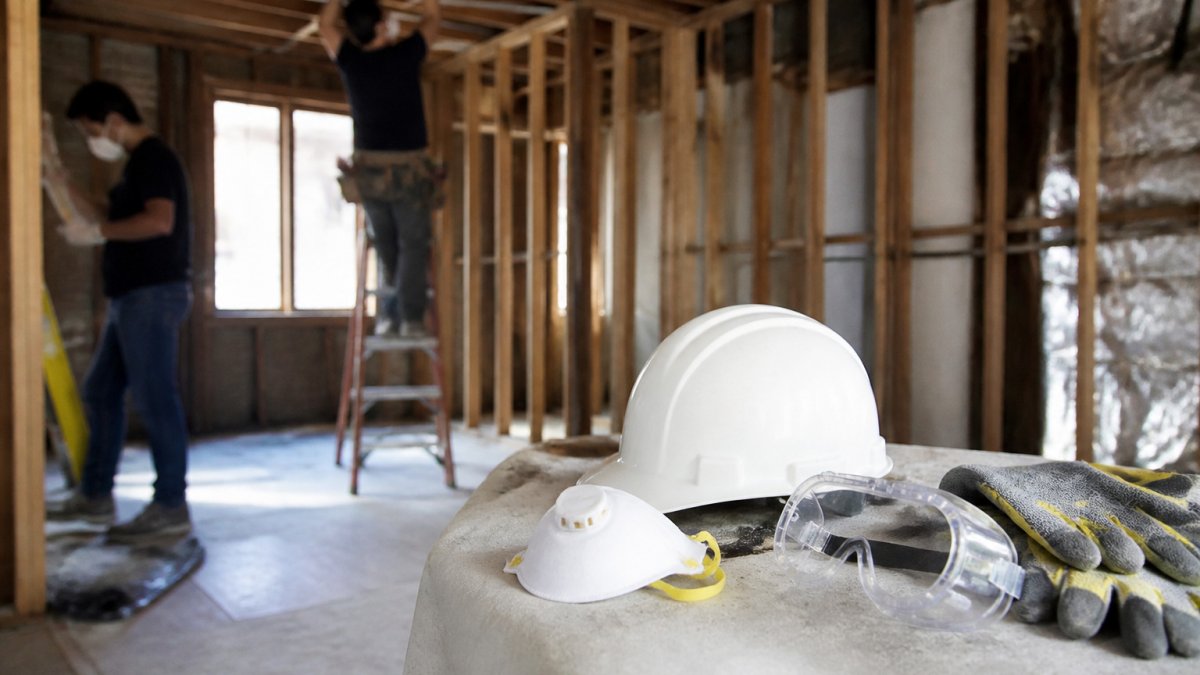
Renovation safety is different when your family stays in the house. Construction crews are trained for job sites, but your kids, pets and older relatives are not.
A renovation is a temporary construction zone inside a home you still use every day.
Families generally do best when they treat safety as part of the project plan, not an afterthought. Below, we cover five concrete steps, plus the stress that comes with living through the work.
- Hazards multiply when children and pets can reach open work areas.
- Dust and debris reach living spaces unless you contain them.
- Chemicals, exposed wiring and stored materials need clear rules.
Step 1: Build a Home Renovation Safety Plan Before Work Begins
Start with a written plan that names the risks in your home and who is responsible for each one.
Your plan should cover:
- Work hours: When noisy or dusty work happens, and when the home stays quiet.
- Access rules: Which doors crews use and which doors family members use.
- Emergency contacts: The contractor, a backup contact and your local emergency number.
- First-aid supplies: A kit stored in an obvious place, away from the work zone.
Ask your contractor to walk the site with you before work begins. Point out electrical panels, water shutoffs and any rooms you will still use.
The plan should name the key areas to cover, each with a concrete item to set up.
| Plan element | What to include | Why it matters |
|---|---|---|
| Work hours | When noisy or dusty work happens | Keeps quiet time for the home |
| Access rules | Which doors crews and family use | Separates crew traffic from living space |
| Emergency contacts | Contractor, backup contact, local emergency number | Speeds response during an incident |
| First-aid supplies | Kit in an obvious place | Stored away from the work zone |
Step 2: Set Up Separating Renovation Work Areas From Living Space
Physical separation is the single most effective protection for a family living at home. Plastic sheeting with zipper doors, sealed doorways and clear pathways keep work zones distinct from living areas.
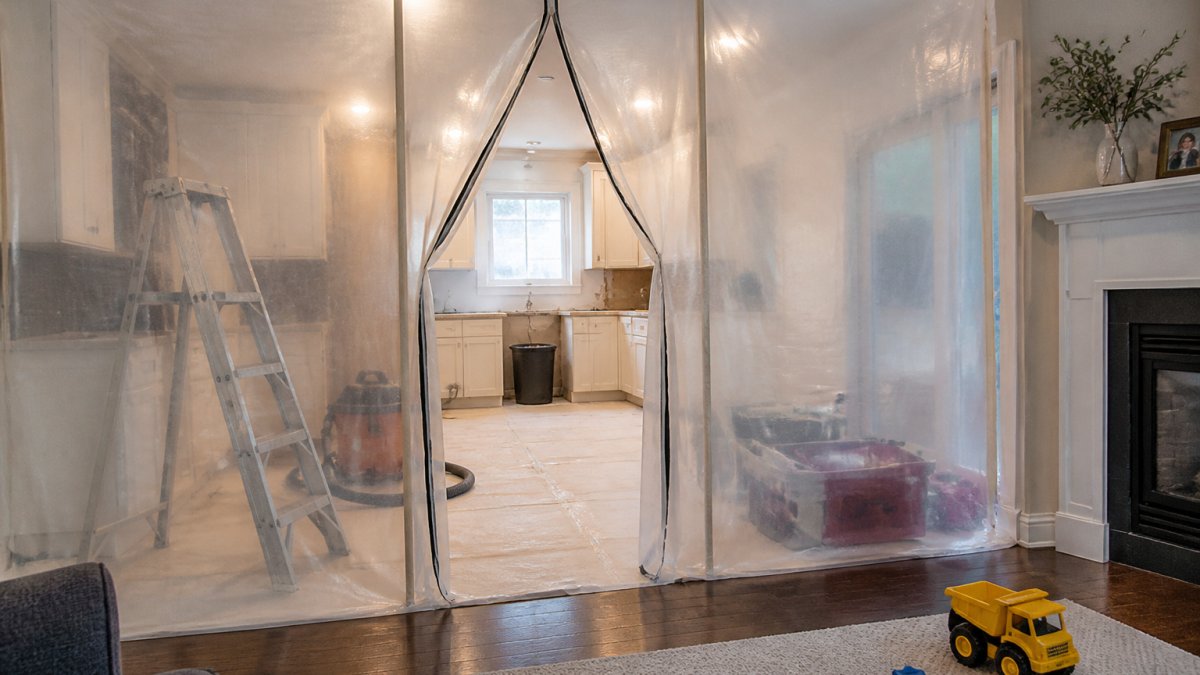
Set up separation in these ways:
- Seal doorways to the work area with heavy plastic and tape.
- Install a zipper door so crews can pass without opening the barrier fully.
- Keep one clear route to the bathroom and kitchen at all times.
- Mark the boundary with signs or tape on the floor.
Inspect the seals each morning, because a torn corner can let dust drift into the living room within hours.
Step 3: Child-Proof the Renovation Zone and Protect Pets
Children and pets move unpredictably, and they reach low-level hazards that adults miss. Treat the work zone as off limits to everyone who is not working in it.
- Lock or latch all doors into the work area.
- Store tools and fasteners out of reach, in closed cabinets or on high shelves.
- Keep pets in a separate room with a door that closes, away from noise and open floor.
- Teach children a simple rule: stay out of rooms with plastic sheeting and tools.
Renovations also change how your home feels to pets. Moving furniture and loud tools can cause stress, so give animals a quiet, familiar space with food, water and a bed.
Step 4: Control Renovation Dust and Debris to Protect Air Quality
Dust is the hazard most families feel every day. Fine particles from drywall, sanding and demolition can travel far beyond the work zone and settle on surfaces you touch.
Reduce dust exposure with these measures:
- Ask crews to use dust-containment methods, such as sealed barriers and negative-pressure fans where appropriate.
- Run a HEPA air filter in the living areas.
- Change your HVAC filters more often during the project.
- Clean floors with a damp mop rather than sweeping, which spreads fine dust.
Debris also creates trip and cut hazards. Ask for a daily cleanup at the end of each shift and a clear route through the house at all times.
Step 5: Manage Hazardous Materials, Storage and Electrical Risks
Renovations stir up materials that were never meant to be airborne inside a lived-in home. The hazards fall into three buckets, legacy contaminants in older buildings, modern off-gassing products, and live electrical work, and each needs a different control.
Legacy contaminants: lead, asbestos and silica
If the home was built before the mid-1980s, assume lead paint may be present until testing says otherwise.
Asbestos follows a similar rule. Asbestos fibers cause harm only when disturbed and inhaled, so the trigger is demolition and sanding, not the material sitting intact (Asbestos and your health).
Silica is the modern-day equivalent. Cutting concrete, brick, tile and engineered stone releases respirable crystalline silica, which scars lung tissue over years (CCOHS: Health and Safety Report).
Modern products: VOCs and off-gassing
Paints, adhesives, sealants, caulks and new engineered-wood products release volatile organic compounds (VOCs) for days to weeks after installation. Formaldehyde from pressed-wood cabinets and flooring is a common offender. The practical controls are straightforward:
- Choose low-VOC or no-VOC paints, adhesives and sealants where the budget allows.
- Ask crews to open windows and run fans in the work area during and after application.
- Keep infants, pregnant household members and anyone with asthma out of freshly painted or glued rooms until odors clear, a common rule of thumb is 72 hours, longer for solvent-based products.
- Run a HEPA or activated-carbon air filter in adjacent living areas during the off-gassing window.
Storage and electrical rules
- Store chemicals in original labeled containers, locked, and never in the same cabinet as food or pet supplies.
- Keep solvents and fuels out of rooms where children sleep or play, even temporarily.
- Confirm power is off at the panel before any circuit work, and insist on a licensed electrician for rough-ins and tie-ins.
- Schedule electrical work for hours when children are at school or away, and treat every exposed wire as live until the electrician confirms otherwise.
Chemical and electrical hazards deserve the same attention as dust, since they can be just as dangerous to children. If you would rather hand off the electrical and plumbing risk entirely, you can review the full range of trades we handle.
Living at Home During a Renovation: Protecting Your Family's Stress Levels
Most renovation guides stop at physical safety. In practice, the strain of living inside a construction zone is the hazard families feel every single day, disrupted sleep, lost routines, constant noise, and the low-grade vigilance of watching children around tools and plastic sheeting. That cumulative stress affects decision-making, patience and sleep, which in turn makes households less safe, not more.
What actually drives renovation stress
A few patterns show up again and again:
- Loss of control, the home no longer feels like a refuge, and family members cannot predict what each day will bring.
- Noise and sleep disruption, early crew arrivals and power tools fragment sleep, especially for shift workers, infants and older relatives.
- Decision fatigue, selections, change orders and unexpected findings pile up on top of normal life.
- Role strain, one partner often carries the contractor communication while the other manages children and pets, and resentment builds quietly.
Concrete routines that reduce the load
- Protect one room completely. A bedroom or den that stays clean, quiet and crew-free gives every family member a place to decompress. This is the single highest-value stress intervention.
- Publish a weekly schedule. A shared calendar of loud days, quiet days, inspection days and no-crew days removes the daily uncertainty that drives most friction.
- Set a daily 15-minute check-in. A short conversation between the adults about what is working and what is not catches problems before they escalate.
- Give children a job. Age-appropriate tasks, packing a box, choosing a paint chip, drawing the new room, restore a sense of control and reduce anxiety.
When to escalate
If sleep loss, conflict or anxiety persists for more than a couple of weeks, it is worth raising with the contractor, schedule adjustments, a short pause on noisy work, or sequencing heavy phases around school terms can all help. For persistent distress, a family doctor or employee assistance program is a reasonable next step; renovation stress is common enough that most practitioners recognize it.
Booking Your Renovation Safety Walkthrough With Innovative Interior Consultants
Every safe renovation starts with a clear plan and a team that communicates well. At Innovative Interior Consultants Inc, we handle budgeting, staffing and on-site organization for projects in occupied homes.
Before work begins, request a renovation quote so we can review your project scope.
If you want to compare your options, our renovation stress guide covers scheduling and communication in more detail.
Frequently Asked Questions
How do you keep children safe during a home renovation?
Keep children out of active work zones at all times, and use physical barriers rather than verbal warnings. Install temporary gates or plywood barriers across doorways, store tools and adhesives in locked cabinets, and never leave ladders, saw horses or open paint cans within reach. Set a rule that the renovation area is off-limits, then walk your children through the barrier so they understand where the boundary is. Review the set-up each morning before work starts, especially after a crew has left tools or materials out overnight. Plan a quiet room or play space on the living side so children have somewhere to be when the work is loud or messy.
What are the biggest safety hazards during a home renovation?
The most common hazards are falls from ladders and scaffolding, dust and fine particles, electrical risks from exposed or temporarily disconnected wiring, trip hazards from cords and debris, and exposure to materials such as older paint, adhesives and solvents. Renovation work in homes built before the 1990s can disturb lead-based paint or asbestos, so test before demolition. Keep walkways clear, use temporary lighting, and confirm that the crew uses proper ventilation and protective equipment. Ask your contractor to identify hazards in writing before work begins, and to tell you if anything unexpected turns up mid-project.
How can you separate a renovation work area from the rest of the home?
Use a combination of solid barriers, sealed doorways and a dedicated entry route. Polyethylene sheeting over a light wood frame, sealed with tape at the edges, works well for most doorways, and a zipper door lets people pass without letting dust through. Shut down HVAC supply and return vents in the work zone or cover them, and keep the work area under negative air pressure with a fan venting outside if the project is dusty. Designate one route for workers and materials so the rest of the home stays clean and accessible. Mark the boundary clearly so family members know which spaces are off-limits.
Is it safe to live in your home during a renovation?
Yes, for most projects, provided the work area is properly isolated and the crew follows site safety practices. Living at home is practical for kitchen, bathroom and flooring work, but it becomes harder when the project involves structural changes, major electrical or plumbing work, or the loss of a bathroom or kitchen. Plan for a temporary kitchen or bathroom in advance, confirm water and power shutdown schedules with your contractor, and ask about dust and noise controls before the first day. If anyone in the home has asthma, a respiratory condition or a weakened immune system, discuss a temporary relocation with your contractor and doctor.